Sunday, May 27, 2018

WASTEWATER TREATMENTS

They are the basis of how traditional wastewater treatment facilities operate: 

  • Primary Wastewater Treatment: it involves sedimentation of solid waste within the water. This is done after filtering out larger contaminants within the water. The water is passed through tanks and filters that separate water from the contamination.This primary batch of sludge contains nearly 50% of suspended solids within wastewater. 

  • Secondary Wastewater Treatment: makes use of oxidation to further purify wastewater. There are three ways to do it: 
        - Biofiltration: employs sand filters, contact filters, or trickling filters to ensure that 
         additional sediment is removed from wastewater. 

       - Aeration: entails mixing wastewater with a solution of microorganisms. The resulting
         mixture is aerated for up 30 hours.

      - Oxidation Ponds: utilizes natural bodies of water like lagoons. Wastewater passes
        for a period of time and then is retained. 


  • Tertiary Wastewater Treatment: is mostly comprised of removing phosphates and nitrates from the water supply. Activated carbon and sand are materials that assist in this process.

                           Resultado de imagen de wastewater treatment

Tuesday, May 22, 2018

BREAKING NEWS

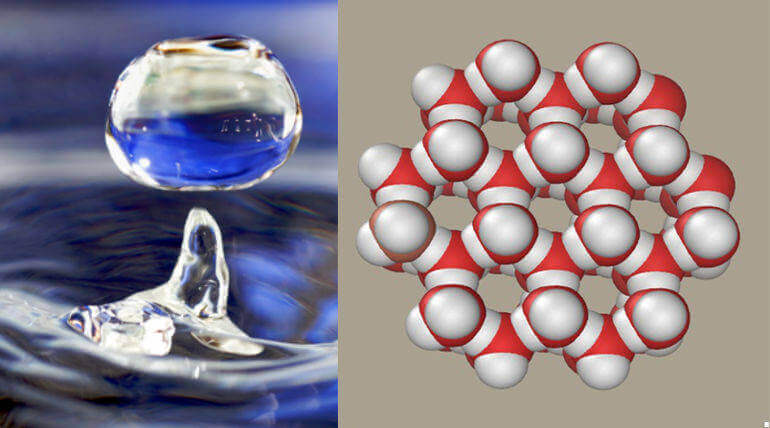
Scientists have used a powerful X-ray laser to perform experiments on an exotic state of water. The experiment turned the laser into the fastest water heater ever by heating the water to 100,000 degrees Celsius in less than a tenth of a picosecond. That is insanely fast, too fast to really wrap your brain around.

Picosecond is the is the unit of time that is used for one trillionth (10−12 or 0'000.000.000.001).

The water was heated in a millionth of a second. The experiment was performed by a team led by Carl Caleman in the Uppsala University in Sweden. The experiment used the Linac Coherent Light Source at the National Accelerator Laboratory in the US to shoot intense and ultra-short flashes of the X-ray laser at the water.

Caleman says that when we boil water, as it heats the molecules are more and more strongly shaken. Heating using thThe hotter, the faster the motion of the molecules. e laser is “fundamentally different” according to the scientist. The X-rays punch electrons out of the water molecules and destroy the balance of electric charges.

Suddenly the atoms feel a strong repulsive force and start to move violently.” The water goes through a phase transition from liquid to plasma in less than 75 femtoseconds. Plasma is a state of matter where electrons have been removed from the atoms leaving a type of electrically charged gas.

When the water transitions from liquid to plasma, it remains at the density of liquid water significantly. This is an exotic state of matter that can’t be found naturally on Earth. The team says that the plasma created has similar characteristics as some of the plasma found on the sun and Jupiter but has a lower density. The plasma created is hotter than the Earth’s core.
                                                  
Resultado de imagen de Scientists have used a powerful X-ray laser to perform experiments on an exotic state of waterResultado de imagen de Scientists have used a powerful X-ray laser to perform experiments on an exotic state of water

PHOTOSYNTHESIS AND RESPIRATION

The process of Photosynthesis and Cellular Respiration are complemented. Both reactions occur inside the plants but only the Photosinthesis occurs in the plants and the other one in every living cell. Some important comparations are:

PHOTOSINTHESIS                                                                                                                     
    • absorbs H2O and CO2.
    • releases O2.
    • makes sugar and other compounds.
    • stocks up energy and nutrients.
    • it accurs only in cells with chlorophyll.
    • uses simple chemical compounds to produce complex compounds.


CELLULAR RESPIRATION: 
    • absorbs O2.
    • releases H2O and CO2.
    • splits sugar and other compounds. 
    • releases energy from nutrients.
    • it occurs in every living cells.

So, the definitions of Photosynthesis is: process in which plants use to trap the sun's energy and build carbohydrates (glucose) that store energy. 
And the definition of Cellular Respiration is: phisiological process that converts biochemical energy from nutrients to adenosine triphosphate and then releases water products. This process exchanges gases with the environment. 


REACTIONS: 

Resultado de imagen de chemical reactions involved photosynthesis


The Photosynthesis uses solar energy and produces O2 and the Cellular Respiration absorbs O2 and converts the energy in glucose into ATP (is the main power source) for use by the cells.